CLICK HERE FOR THOUSANDS OF FREE BLOGGER TEMPLATES »

Tuesday, 18 January 2011

~somehow read in The Star online

TEACHING THROUGH HUMOUR

Fresh from a humorous workshop by abbot Ajahn Brahm, our columnist will take his stories over preachy self-help books anytime.

Blame it on a stubbornly egalitarian outlook, but I’m highly allergic to prescriptive prose.

I’ve never read Zig Ziglar, Robert Kiyosaki, Anthony Robbins or any of those big name life gurus. I gleefully delete every life improvement seminar e-mail blast that spams my mailbox. The only how-to book I’ve read cover to cover is The One Minute Manager, and that’s only because it was compulsory reading by my then employer.

Ever since I was commissioned to edit a horrifyingly clichéd book titled Secrets of Making Your First Million or some such name (that’s another story), I’ve felt that self-help books are an insult to our intelligence. They are a thinly-veiled attempt to dupe the gullible and desperate into parting with their money for what’s essentially common sense . . . which made me the unlikeliest person to sign up for two back-to-back workshops entitled, Dealing with Unhappiness and Worries and Discovering Love in Difficult Places.

Australian abbot, Ajahn Brahm.

Blame it on my Greek God. While sculpting my latest hairstyle, he dropped this tantalising one-liner: “If there was one book you must read before you die, it’s this one.”

I sat up with a start, almost causing an accident. Andrew — an astute psychologist as well as an ace hairdresser — rarely gives such thumping endorsements.

“. . . And I have a copy of the book in my shop if you want a peek,” he added slyly.

Well, with dangerous weapons so near my head, I couldn’t risk insulting the man by saying no, could I?

The tome had a quirky title: Who Ordered This Truckload of Dung? I scanned the bio briefly: the author Ajahn Brahm was as beloved for his humorous stories as he was for his uplifting teachings. Trying not to make my disdain too obvious, I began flipping the pages suspiciously.

(Brahm was born Peter Betts in London in 1951, and ordained in Bangkok at the age of 23. He is the Abbot of Bodhinyana Monastery in Serpentine, Western Australia. )

By the time my haircut was over, I had already devoured half the book, racked by laughter and tears.

So when a friend told me the venerable teacher would be in town for a seminar, I wasted no time in registering, and even talked two sceptical friends into coming along for the party.

The venue: the air-conditioned auditorium of one SRJK Chee Wen, Subang Jaya. The date: Feb 22.

By now, I had done enough reading up to know his talks were popular but the huge turnout — it was full house on a balmy Sunday afternoon — took me by surprise. What, precisely, was his X-factor?

A short intro later, Ajahn Brahm leaped out of the pages onto stage in his wrinkly brown robes, wearing that familiar impish grin that seemed photocopied from the book.

His subsequent summary of himself was certainly different from the glowing tribute which prefaced his appearance.

“I became a monk after my girlfriend dumped me. If she hadn’t done that, I would be married with a mortgage and four kids who give me a lot of trouble. If I ever meet her again, I must say thank you for getting rid of me!”

In describing one of his earliest challenges — mosquitoes in the Thai forest where he studied meditation — he deadpanned, “Do you know that mosquitoes have been trained to recognise that men in brown robes make a better dinner?

“This is why 1) they know that we cannot swat them, 2) because we are bald, they have more landing space. When they see a monk, they think to themselves, ‘Oh here’s a restaurant with more seats!’

“And 3) they make a beeline for Western monks because . . . they rarely see Western monks in this part of the world. Humans like to try new things, and it is no different with mosquitoes. They also want to have . . . Western food!”

My jaw dropped several times. Where was the holier-than-thou man of God I’d half-expected?

By the time we drove out of the school a marathon seven hours later, we were exhausted. My jaws ached from laughing too much, and my head, curiously heavy yet light-headed.

All he had done the entire session was tell stories, yet those simple, humorous tales had stirred in me more than any other experience in recent memory.

I wondered how it went down with my friends, darting a fearful glance at the two companions whom I had arm-wrestled into coming.

“He’s so down-to-earth . . . the way he responded to that guy about bald heads . . .” They burst into renewed giggles.

During the Question and Answer session, some smarty pants asked: “Why do monks have bald heads?”

Without missing a beat, Ajahn Brahm quipped: “Because otherwise they would tear all their hair out answering questions like these!”

Ever the gentleman, he followed with a considered, sober answer despite knowing full well — as the audience did — that the question was some heckler’s attempt to test his Venerable One’s ability to think on his feet.

I had come to the talk prepared for his wit. What I didn’t expect was his bracing, almost unsettling, honesty.

In response to a question about his views on premarital sex, he replied, “You will have premarital sex and your children will have premarital sex and you won’t be able to stop that. All you can do is to protect them. And protection is not about contraceptives alone, it’s also about protecting their emotions.”

A very down-to-earth, sensible, yet non-judgmental statement that he prefaced with a somewhat shocking admission: before he joined the monastery, he was no angel himself. He had had his share of romantic relationships and could have just as easily become a father by accident, as an ascetic.

“It’s almost like he’s one of us,” Maria marvelled.

Perhaps that was the secret behind Ajahn Brahm’s broad appeal. He understood the fundamentals of imparting wisdom. It was not about sitting on your high horse, celestial or otherwise, and dispensing advice like you’re better than everyone else, but about honest sharing and relating.

Remarkably, for someone so accomplished, he was never patronising or sanctimonious. (He won a scholarship to study Theoretical Physics at Cambridge in the late 1960s.) On the contrary, he poked fun at himself whenever the opportunity presented itself.

He admitted cheerfully, “One character flaw I can’t change is that I like to crack silly jokes.”

I ran my fingers reverently over the brown-shaded book I had purchased from the sales counter, and turned it over.

“It would fall apart from your attention,” an enthusiastic book reviewer raved.

If my already dog-eared book of just one month is any indication, a truer blurb was never writ.

> Alexandra Wong (bunnysprints.blogspot.com) says teaching is not preaching.
Monday, 6 December 2010

~What a Wonderful World~


I see trees of green, red roses too
I see them bloom for me and you
And I think to myself what a wonderful world.

I see skies of blue and clouds of white
The bright blessed day, the dark sacred night
And I think to myself what a wonderful world.

The colors of the rainbow so pretty in the sky
Are also on the faces of people going by
I see friends shaking hands saying how do you do
They're really saying I love you.

I hear babies crying, I watch them grow
They'll learn much more than I'll never know
And I think to myself what a wonderful world
Yes I think to myself what a wonderful world.

Sunday, 28 November 2010

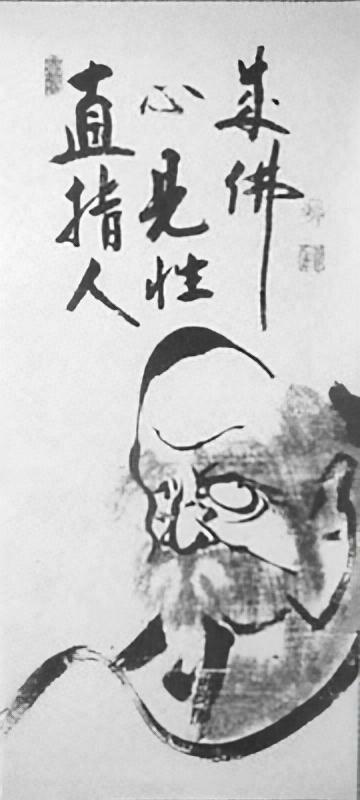
Zen Master Hakuin's Equanimity


The Zen Master Hakuin (1686-1769) travelled extensively to learn from other masters. When he was 32 years old, he returned to the Shoin-ji, the temple in his home town of Hara, in present-day Shizuoka Prefecture. Here he devoted himself to teaching a growing number of disciples. Hakuin was praised by his neighbors as a teacher living an exemplary life.

A beautiful Japanese girl whose parents owned a food store lived near him. One day without warning, her parents discovered that she was pregnant.

This made her parents angry. The girl would not confess who the man was, but after much harassment, she named Hakuin as the father.

In great anger the parents went to the Zen Master and scolded him in front of all his students. All Hakuin would say was “Is that so?”

After the baby boy was born, it was entrusted to Hakuin's care. By this time he had lost his reputation. His disciples have left him. However Hakuin was not disturbed, and enjoyed taking care of the little boy. He obtained milk and other essentials the boy needed from his neighbors.

A year later, the girl-mother couldn't stand it any longer. She confessed the truth to her parents— that the real father of the boy was not Hakuin but a young man working in the local fishmarket.

The father and mother of the girl went to Hakuin at once. They asked his forgiveness and apologized profusely to get the boy back.

Although Hakuin loved the child as his own, he was willing. In giving up the boy, all he said was: “Is that so?”

— Edited from Paul Reps, Zen Flesh, Zen Bones (1957), p. 22


Where would we be if we falsely being accused for things we did not do?

Wouldn't we fight until the last blood for our justice?

But Master Hakuin is different...

He understand that the baby is innocent.

He knows that things happened because of causes and conditions..

He also knows that things end because of causes and conditions...

He practices the Paramitas of Patience so well...that he does not affected by the external tests and criticisms even though he was being framed by other people..

His story really touches me..

I have to admit that I nearly cried from my heart when Reverend Tong Ming was telling this story during the Annual Camp 2010 which has just passed.

This story would be my inspiration whenever I meet any problems like this.

I am still learning and there still a long Way to go...

But I chose to walk step by step...


Deep in my heart,

I am very grateful to have the opportunities to learn the Dhamma.

It helps me to realize the meaning of a true life.

May all beings and non beings,

May all that I known and haven't known,

May all that I can see and can't see,

May all that I can hear and can't hear,

May all in this infinite universe,

MAY YOU ALL BE CHERISH IN THE JOY OF DHAMMA...


Thursday, 18 November 2010

Smashpop's Lenovo Giveaway - I support Siew5

I support Siew5~!!!!

For more information, pls log into http://www.smashpop.net/.

Saturday, 23 October 2010

Believe, Moving, Enjoying~

if you believe.....
you will move on....
keep moving on, my friends....
you will never know where will you be 2moro..


sadness is just the training....
panic is just the training...
heart pain is just the training...
down is just the training...

seeing things in through keyhole view, we see ourself as the biggest thing in the world...

open the door and see the world, we are not like we think it is...

just enjoy the training..and keep enjoying the fullest of this life...life is short...dun waste it...

Sunday, 23 May 2010

When a Buddhist meets a Christian....


On last Friday nite,
I was attending a farewell party of my friend who is going to US for studies.

In the party, there are about 9 people of us..
During the party,
there was a time,
one of my friend asked me about Buddhism...as his college friend asked him to join one of the Buddhist societies.. So, I share out my experiences and what I have learned about Buddhism..
It was happened to be another friend of mine who is a strong Christian follower at side following our conversation..

So, after a while the conversation changed direction,
it suddenly becomes a conversation between a Buddhist and a Christian,
the good friend of mine ask me questions and speaks out his opinion,
There is when we come across over a topic where the believe in the existence of God..
He shared out that he really believe in just one mighty God and he believes that this God is not just appear in Western World. The God would also appear in many forms and can be accepted in many cultures..
He then jumped to the conclusion for Buddhist that Buddhist does not believe in the existence of God..
Instead, I gave him the answers that Buddhist actually believe in the existence of God...
He looked in disbelieved and asked me whether I was with the right Buddhist teaching...

dear all...
as a Buddhist,
we are ought to respect other people...
as a Buddhist,
we are ought to avoid for condemn other people's believe...
as a Buddhist,
we are ought to be humble and act wisdomly...
as a Buddhist,
we are ought to remember to look back into our own problems which keep us in samsara world and try to overcome the problems..

Continue back the story,
actually,
Buddhist does believe in the existence of God..
but that is not the part where Buddhists are heading..
to make the ground clear,
the Buddha is not a God which many claimed..
He is a Teacher who discovered the path to cease suffering..
He is not the person who create the path,
He discovered it literally like Sir Newton discovered earth gravity...
but, He discovered it from all His hardworks, determinations and compassion..
so,
from the teaching of Buddha,
in this world of samsara(suffering),
there are 6 planes of existances,
1) Heavenly Beings
2) Asuras
3) Human
4) Animal
5) Hungry Ghost
6) Hell Beings
The God existence is in the Heavenly Beings planes..
So, this proved that we do accept the existance of God.
but,
in Buddhism,
all these planes of samsara existence are not advisable to take refuge on..
all of them has their own problems and worries,
In Buddhism,
we are taking refuge on not only the Buddha,
we are taking refuge on the TRIPLE GEMS,
TRIPLE GEMS = BUDDHA, DHARMA and SANGHA
because TRIPLE GEMS lead and guide us to cease our suffering and worries
TRIPE GEMS are making us realize what are our own worries and help to solve our problems..
The important objective in Buddhism is, we as beings who still got strangled in the world of samsara, have to find why are we got strangled and how to escape and act to release ourselves from the stranglehold.
We shall not go finding the peace of life externally, and we shall search it internally within us...
Dont be like searching far away outside our house for thieves, when the thieves are actually inside our house...

Dear Christian followers,
if you happened to read my writing over here,
Actually
The directions of the Christianity and Buddhism are not the same..
we cant compare which one is better and be boasting around...

In Christianity,
It may all about the Mighty God and human...

In Buddhism,
the general ideas are,
we avoid all evil,
we practice good deeds,
and we purify our mind...

after all,
it would be better when
we choose to respect others,
and we choose to praise and learn for the goodness
and we choose to avoid from the evil....


during the conversation,
i was watching myself,
there were times i saw my ego arose,
Egoness which makes me superior, knows better and wanna intercept and debate to make others accept my opinions...
but I able to see these feeling and managed to overcome it,
I chose to listen to others opinions and speaks whenever it is suitable to speak...

It is not effective to force others to agree with us when the person have his strong opinion about the matter,
it is juz like the simile of a cup
when a cup is turned upside down,
the water can not fill the cup.

It is also not effective to force others to agree with us when the person have his strong belief on his misunderstanding...
It is just like the cup contained poison,
when water is poured in the cup,
the water cant be consumed as the water already poisoned...

Inside me,
Surfaced the story images of the times when Buddha meets the strong followers of other religion,
For me, this is one of the example of situation,
suddenly the strong feeling of praising the Buddha arose and I somehow gt very impressed with his wisdom in facing such problems,

Suddenly got shamed by my lackness of learning dhamma recently,

Oh Buddha,

I still have alot alot more to learn....

Monday, 22 March 2010

~Rock~

The teaching the people least understand and which conflict most with their opinions is the teaching of letting go or working with empty mind...

when we conceive this in worldly terms, we get confused and think that we can do watever we want..

it juz like;

we are carrying a heavy rock


after a while we begin feel the weight,
but we dont know how to let go
so, we endure this heavy burden all the time.

If someone tells us to throw it away,
we say, " if i throw away, i won't have anything left!"
If told of all the benefits gained by throwing it away,
we would not believe it,
but would keep on thinking,
"if i throw my rock away, i will have nothing"

So, we keep on carrying this heavy rock until it becomes so unbearably heavy,
and we become so weak
and exhausted,
that we just have to drop it
.
.
.


Having dropped it,
we suddenly experience the benefits of letting go...
we feel better and lighter
we know ourselves how much the burden carrying a rock can be...

before we let go of the rock,
we couldn't possibly know the benefits of letting go...
Later on
we may start carrying burdens again,
but now we know what the results will be,
so we can let go more easily...

This understanding- it is useless carrying burdens around and letting go brings ease and lightness - is an example of knowing ourselves...

OUR PRIDE
OUR SENSE OF SELF THAT WE DEPEND ON..
is the same as the HEAVY ROCK...

like the rock~
if we think about letting go of self,
we are afraid that without it there will nothing left..

but,
when it is time we can finally let it go,
we realize for ourselves the ease and comfort of not clinging....

~Ajahn Chah~